
Art as Controlled Hallucination
Humans construct their perceptions of physical reality


Walk through a museum and you will see people staring silently at flat surfaces covered with pigment. Some viewers are moved to tears. Others feel awe, discomfort, nostalgia, or transcendence. Yet physically, the artwork is only canvas, paint, wood, stone, sound waves, and light. This raises a strange question: What exactly are we experiencing when we experience art?
Modern cognitive science shows that human perception is not a passive recording of reality. The brain does not simply photograph the external world. Instead, it constantly predicts, interprets, fills in gaps, and imposes meaning onto sensory information.
The neuroscientist Anil Seth, a professor at the University of Sussex, argues that perception is a “controlled hallucination.” The brain continuously creates internal models of reality and updates them based on incoming sensory data. Humans do not directly experience objective reality. They experience the brain’s best interpretation of reality. Even consciousness and the sense of self, Seth argues, is a construction generated by the brain.
Artists understood this long before neuroscientists did.
A painting does not literally contain depth, movement, sadness, menace, or beauty. The viewer’s mind creates those experiences. A portrait is only pigment arranged on a flat surface, yet viewers perceive personality and emotion. Music is merely vibrating air, yet it can produce grief, suspense, joy, or spiritual feeling. Art works because it exploits the predictive machinery of the brain.

Ernst Gombrich, an art historian at the University of London, made a similar argument in his influential book Art and Illusion. Gombrich argued that art is never a simple copying of reality. Artists work through suggestion, interpretation, and visual conventions that the viewer’s brain actively completes. Perception itself is an interpretive process.
V. S. Ramachandran, a neuroscientist and director of the Center for Brain and Cognition at the University of California San Diego, similarly argued that perception is fundamentally constructive. Through studies of visual illusions, neurological disorders, spiritual experiences, and phantom limb syndrome, Ramachandran showed how the brain actively creates coherent experiences from incomplete or distorted information. He believed artists intuitively exploit these perceptual mechanisms, famously remarking that artists are “neurologists without knowing it,” discovering how to manipulate the brain’s perceptual systems long before neuroscience explained them.
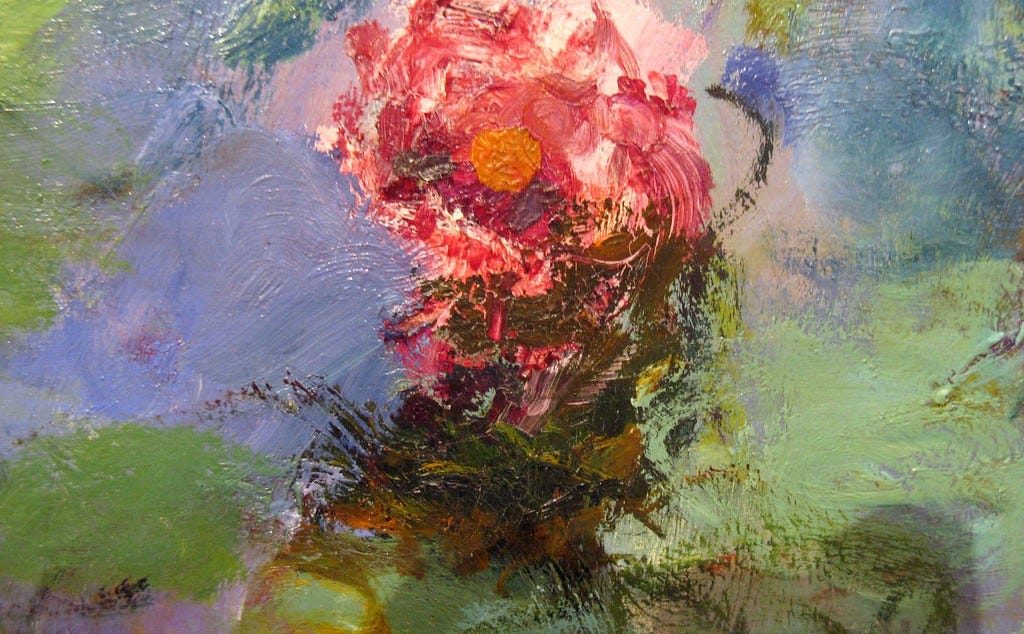
Consider impressionist painting. Viewed up close, many impressionist works appear fragmented and abstract. However, from the proper distance, the brain organizes the fragments into coherent scenes filled with light and atmosphere. The mind actively completes the image. The same principle appears in film and literature. Horror films often become more frightening when the monster remains unseen because the viewer’s imagination fills in the uncertainty. Ernest Hemingway’s “iceberg theory” similarly relied on omission, leaving emotional material unstated so readers would mentally complete the story themselves.
This also helps explain why people react so differently to the same artwork. Because perception is partly constructed internally, viewers bring their own memories, culture, expectations, emotional state, and personal associations into the experience. An abstract painting may appear profound to one person and meaningless to another. A song that deeply moves one person may leave another cold.
This has important philosophical implications. Many people assume perception gives direct access to objective reality. However, modern neuroscience increasingly challenges this assumption. Cognitive scientist Donald Hoffman, professor emeritus at the University of California Irvine, argues that evolution did not shape humans to perceive objective reality accurately. It shaped humans to perceive reality usefully for survival. Human perception evolved not to reveal reality exactly as it is, but to help organisms survive and reproduce.
In ordinary life, people often assume their perceptions are straightforward reflections of reality. Art makes the constructed nature of perception more visible. It reveals how meaning, symbolism, and emotion emerge from interpretation. This may help explain why art has always had a close relationship with religion, myth, dreams, and political spectacle. All involve the mind generating emotionally powerful internal realities.
The psychologist Carl Jung believed symbolic imagery taps into deep psychological structures shared across humanity. Religious rituals use music, imagery, narrative, and architecture to shape emotional experience and perception. Political movements similarly use symbols, slogans, music, and emotionally charged imagery to shape how people perceive social reality. The line between art, propaganda, religion, and advertising is often thinner than people realize.
References
Anil Seth, Being You: A New Science of Consciousness
Ernst Gombrich, Art and Illusion
V. S. Ramachandran, The Tell-Tale Brain
Donald Hoffman, The Case Against Reality: Why Evolution Hid the Truth from Our Eyes
I'm always drawn to arguments like this. Have you read "The Case Against Reality" by Donald Hoffman?
This is just Kant.