
How Cognitive Offloading Expands the Human Mind
Humans have always used tools to help them think


A common misconception about human thinking is that it exists only inside the brain.
When we think about thinking, we usually imagine the brain working on its own. In reality, much of what we call thinking depends on external tools. We use notebooks, maps, calendars, books, calculators, smartphones, and now artificial intelligence to help us remember, solve problems, communicate ideas, and make decisions. Cognitive scientists call this cognitive offloading, meaning shifting mental work from the brain to external tools.
The most obvious reason we offload is that it makes thinking easier, faster, and often more accurate. Most people know how to do arithmetic, but they use a calculator because it is quicker and more accurate. Instead of trying to remember a grocery list, we write it down. Instead of memorizing appointments, we use a calendar. We may use audio dictation because speaking is faster than typing and handwriting. By moving routine mental tasks into external tools, we free our brains to focus on more important problems.
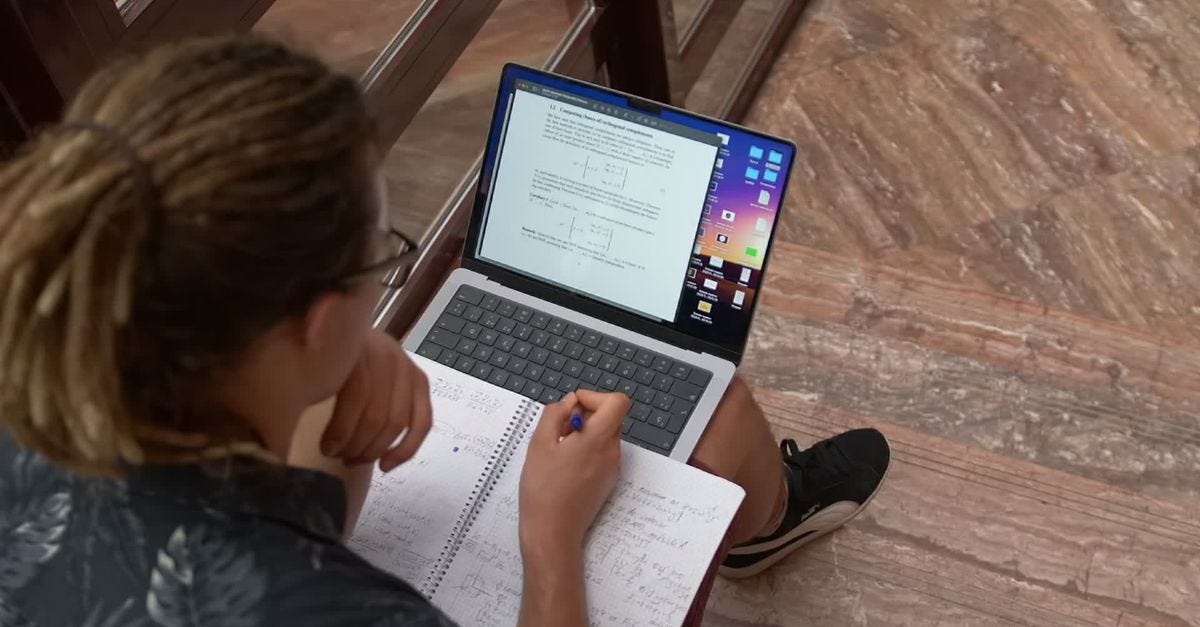
However, cognitive offloading is much more than a way to save mental effort. Many cognitive tools do more than make thinking easier. They expand what humans can think, discover, and understand. Calculus did not simply make mathematics easier. It made it possible to understand motion, gravity, planetary orbits, and countless other natural phenomena. Microscopes and telescopes reveal worlds invisible to the naked eye. Search engines provide instant access to much of humanity’s accumulated knowledge. Artificial intelligence can summarize information, identify patterns, generate ideas, write computer code, and act as a collaborative thinking partner. These tools do not merely reduce mental effort. They increase what humans can understand and do.
Humans have been extending their minds with external tools for thousands of years. Before writing, people used stories, songs, rhythm, and rhyme to preserve knowledge across generations. Ancient Incas used quipu, knotted cords that recorded numerical information. Merchants in Mesopotamia used clay tokens and tally systems to keep track of trade, while the ancient Chinese, Greeks, and Romans used various forms of counting boards and abacuses to perform calculations. Maps expanded spatial understanding beyond direct experience. Even counting on our fingers or tying a string around a finger as a reminder are simple forms of cognitive offloading.
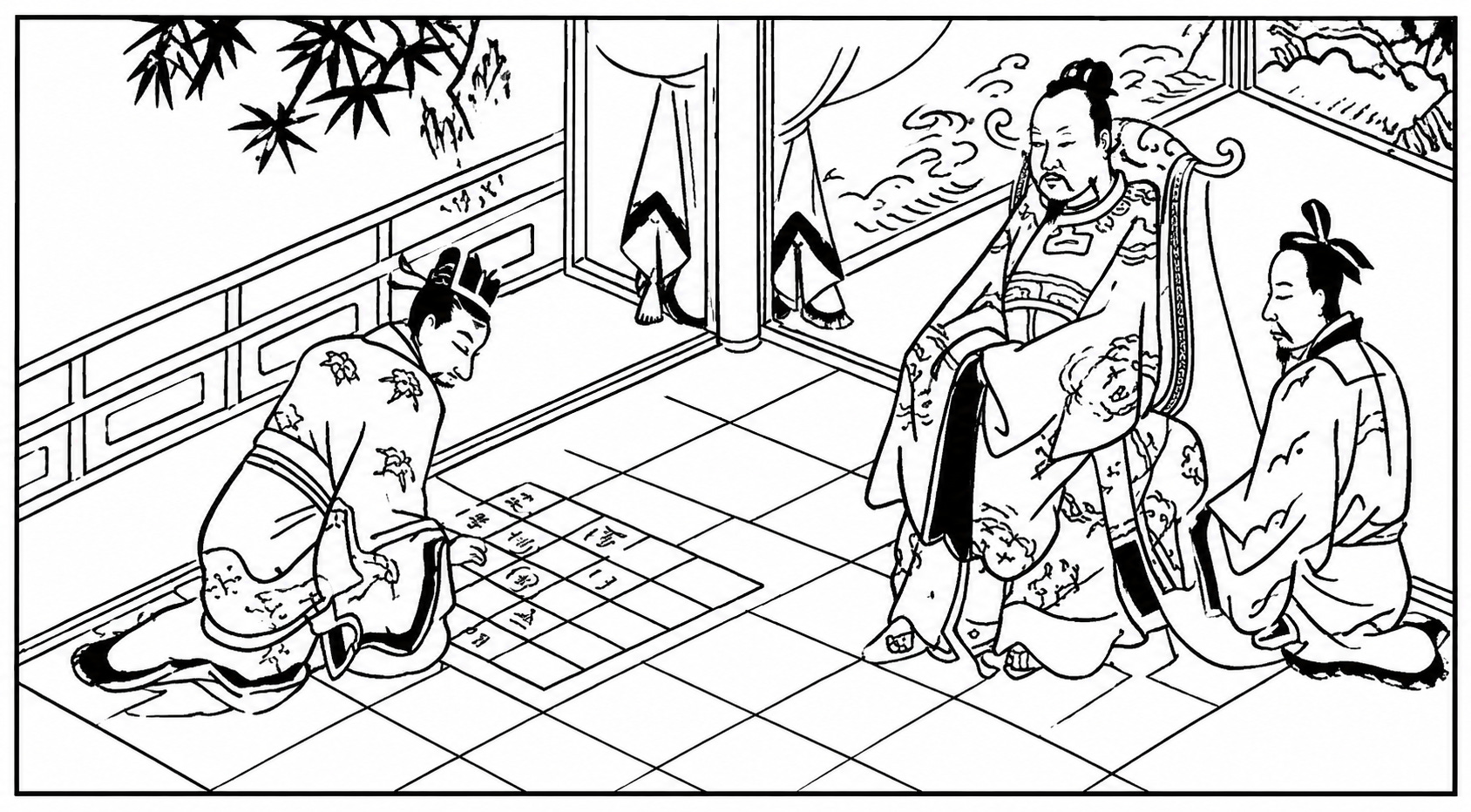
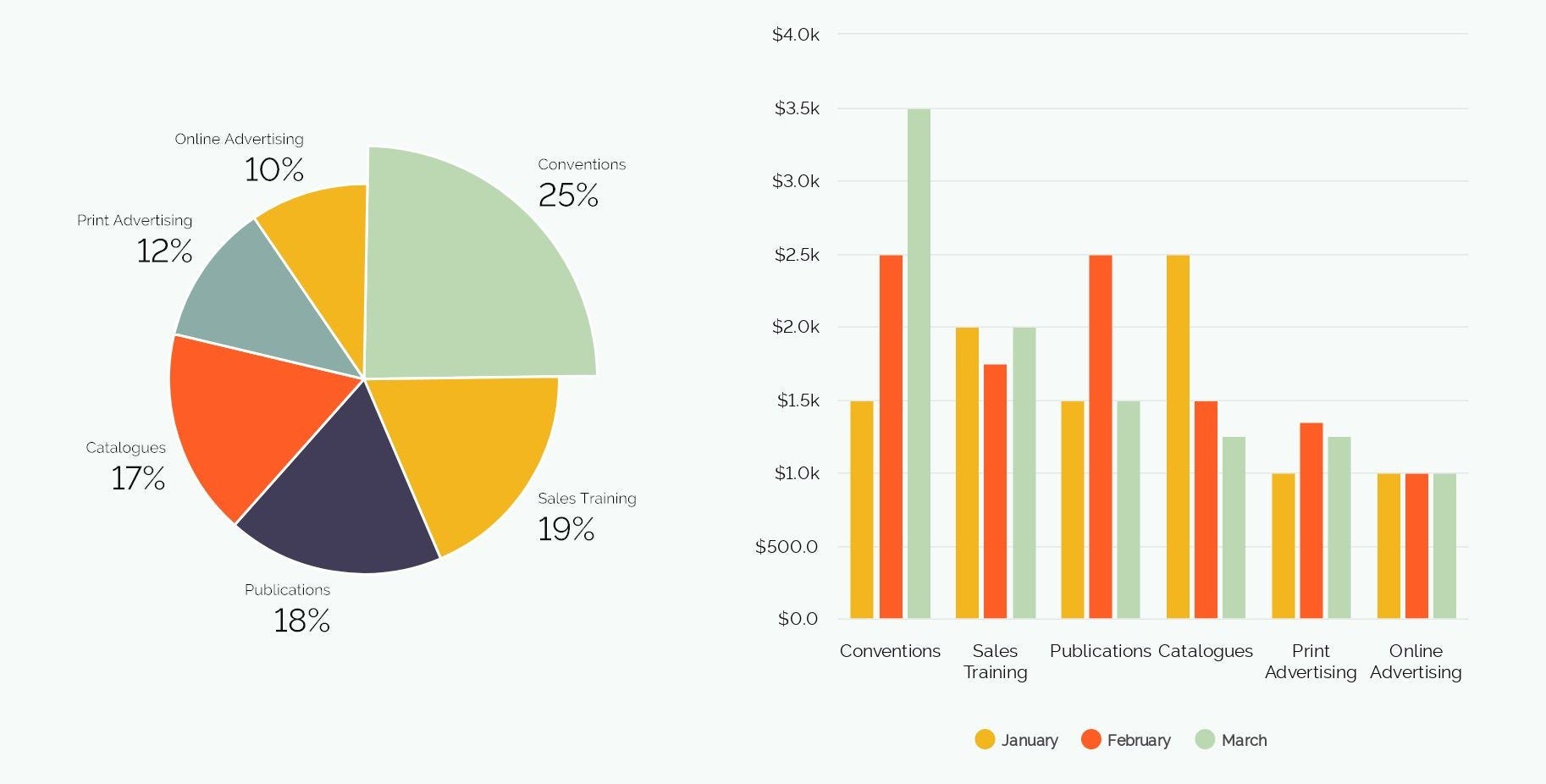
Language itself is one of humanity's oldest cognitive technologies. It allows us to organize thoughts, communicate ideas, remember information, and pass knowledge from one generation to the next. Writing expanded those abilities by allowing information to exist outside the brain. Books preserved knowledge across centuries, while mathematical systems provided a precise language for describing the physical world. Scientific diagrams, graphs, maps, musical notation, and the periodic table are also cognitive technologies. They organize complex information into visual and symbolic forms that make patterns easier to understand, communicate, and build upon.
Philosophers Andy Clark of the University of Sussex and David Chalmers of New York University argue that the mind does not stop at the skull. In their extended mind theory, tools that we use consistently become part of the thinking process.
Viewing tools as extensions of the mind does not mean every form of cognitive offloading is equally beneficial. Like any tool, it can be used well or poorly. Overreliance on GPS can weaken our sense of direction, and depending entirely on search engines or artificial intelligence reduces the incentive to memorize information or develop certain skills. External tools also make us vulnerable to errors, misinformation, technical failures, and biased algorithms. Cognitive offloading works best when it complements rather than replaces understanding. The goal is not to stop thinking for ourselves, but to use external tools to think more effectively and efficiently while retaining the ability to evaluate information critically and recognize when those tools are wrong.
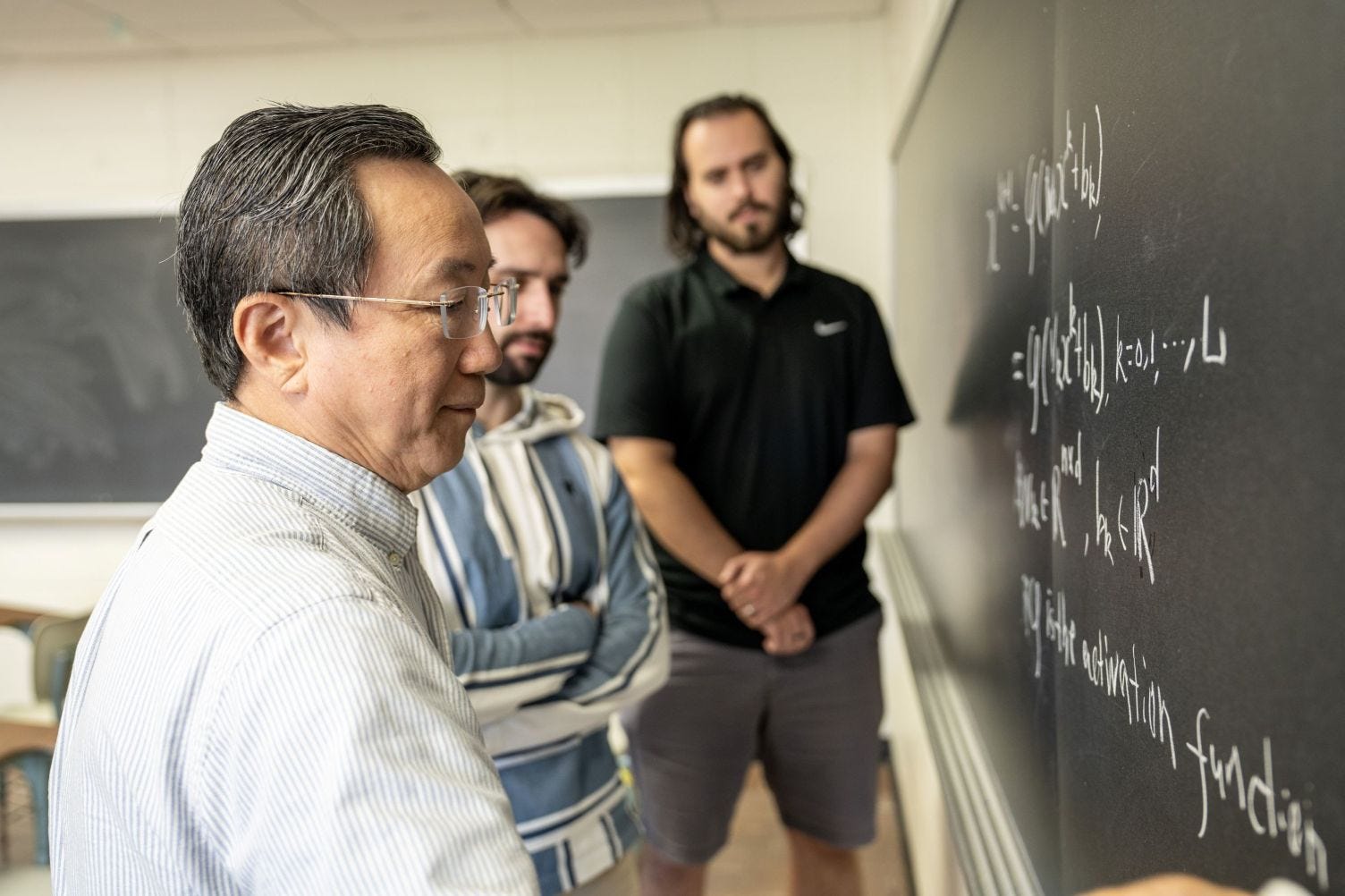
Cognitive offloading is not limited to objects and technologies. It also includes other people. Throughout history, humans have accomplished far more by thinking together than by thinking alone. No individual invented agriculture, mathematics, literature, modern science, or the internet. Civilization is built on knowledge distributed across many minds and many generations. Every generation inherits language, mathematics, science, engineering, history, and culture from those who came before. Modern science illustrates this process. Scientists and engineers rely not only on their own knowledge but also on mathematics, diagrams, written records, measurements, published research, peer reviews, collaboration, and the accumulated work of countless others.
This changes how we think about intelligence. Modern culture often celebrates the image of the lone genius and the independent thinker. Human achievement tells a different story. Intelligence depends not only on what happens inside one brain, but also on how effectively we use tools, share knowledge, and collaborate with others. Throughout history, many of humanity’s greatest breakthroughs have depended as much on new cognitive technologies and collective knowledge as on individual genius.
Today’s technologies continue this long history. Cloud storage remembers what we forget. Virtual reality lets us experience environments that would otherwise be inaccessible. Brain-computer interfaces may eventually blur the line between biological and digital thinking even further.
From language and writing to books, mathematics, computers, search engines, artificial intelligence, and collaboration with other people, human history has been a continual expansion of the human mind. For thousands of years, humanity has become smarter not because individual brains evolved rapidly, but because each generation created better ways to store knowledge, communicate ideas, and think together. Artificial intelligence is simply the newest chapter in that long history.
In the age of artificial intelligence, the important question is no longer, “What can you do without help?” The better question is, “How effectively can you combine your own mind with the tools, knowledge, and people available to you?”
This is a very important point: how people are offload cognitively will differ. Sometimes some people want to talk to others. Others want to forget about it and do something that occupies them, and for me, I love to journal.
Yes, AI can be another great tool to cognitively offload and even expand our knowledge——but only if you have the background knowledge to make use of it. As you noted, it will be valuable only if it is used to “compliment knowledge, not replace it.” My fear is that we usually take the path of resistance, so a lot of people will simply stop trying to understand enough to even gain the rudimentary knowledge necessary for advancing. Mariano identified the need for background knowledge for higher order thinking, but it will be easier and quicker to just rely on AI. Hope can we prevent that with this ubiquitous shortcut?