
The Connection between a UU Congregation and the UUA
Why the Connection Cannot Be Ignored or Dismissed

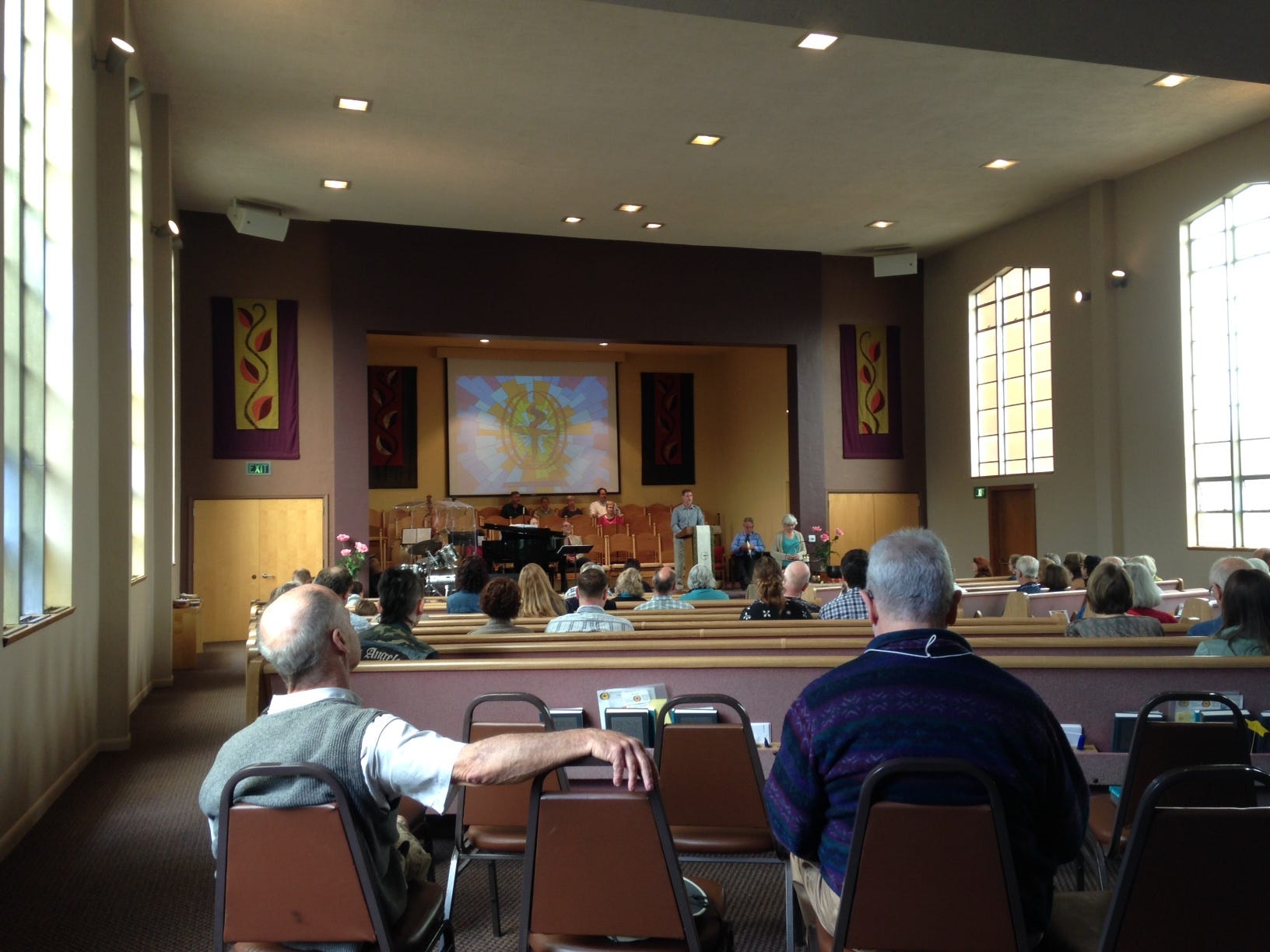
Dear Members, Friends, and Leaders of Seattle’s Westside Unitarian Universalist Congregation,
The Unitarian Universalist Association (UUA) has moved away from core liberal religion values such as open inquiry, viewpoint diversity, and tolerance for disagreement, and has taken a dogmatic and illiberal direction. This shift is not abstract or distant. It has had direct consequences for Unitarian Universalist congregations, including Westside UU.
Many congregants have responded to concerns about the UUA by saying they ignore it or by describing it as “distant in Boston” and irrelevant to the congregation. This letter addresses that claim directly. It explains why that view is false, how Westside is closely aligned with the UUA, and why that connection has real consequences.
The UUA has become dogmatic, censorious, and ideologically rigid. It marginalizes and punishes ministers and laity who express views outside an accepted framework. The General Assembly no longer functions as a genuinely democratic or representative process. Reports of censorship, suppression of dissent, social coercion, and tight control have been well documented, including by University of Akron law professor William Jordan, organizational psychologist Julie Hotard, and, in open letters, by UU ministers Rev. Gary Kowalski (read here) and Rev. Denise Tracy (read here).
In the traditional UU spirit of independence and self-determination, some congregations have chosen to maintain distance from the UUA by limiting financial and institutional ties, creating their own programming, and hiring ministers ideologically and professionally untethered to the UUA. Westside has made the opposite choice. It is closely and intentionally aligned with the UUA.
This alignment is not symbolic. It is structural, financial, and cultural. Each year, a percentage of member pledges is sent to the UUA. According to its bylaws, if Westside dissolves, its property and other assets go to the UUA. A founding member and key financial contributor to obtaining and renovating the current building, who quit the congregation three years ago, said that Westside’s mortgage with the UUA was an “albatross” that prevented the congregation from being independent and truly self-determining.
This alignment is also enforced. The congregation adopts UUA programs and messaging and hires ministers and religious education directors credentialed within that system and loyal to the UUA. A former minister stated in a meeting of concerned congregants that his ultimate loyalty was to the UUA, not to Westside, and that if Westside chose to act independently of the UUA, he would leave. Most of the congregants at that meeting soon after quit the congregation and church. A key Westside leader told a prospective member that those who do not support the UUA should not be members. Westside excludes and refuses to platform dissenting or alternative views in services, sermons, programming, and official communications. This is not a loose affiliation. It is intentional and enforced alignment.
Congregants can and do hold different views about the value of the UUA and Westside’s tight alignment with it. However, two claims are false: that the UUA is irrelevant to Westside and that this congregation operates independently of it. In practice, as numerous former congregants have openly observed, Westside functions as a UUA franchise.
This is not abstract. It is about what it means to belong to an institution.
A friend faced that question with the Catholic church she was raised in. She and her husband left their congregation because of institutional problems in the larger church they felt they could no longer accept. They did not dismiss those issues as distant. They recognized that membership carries personal ethical responsibility and acted on it.
A Methodist friend faced a similar issue. She supports equality for all and was troubled by socially conservative positions of the national Free Methodist Church based in Indianapolis. After examining the congregation she attends and talking with her pastor, she concluded that her local congregation maintained enough independence and supported equality and inclusion, and she chose to stay.
Many Westsiders went through similar discernment. They looked at the direction of the UUA and Westside’s alignment with it and concluded they could not support it.
Longtime members left, including four former board presidents, multiple founding members, and the congregation’s chaplain. Three members explicitly said they refused to allow a portion of their donations to be sent to the UUA. Two searched for a way to financially support Westside without supporting the national organization and found none. They felt their only option was to leave. Another longtime member initially hoped Westside would withhold funds until the UUA changed course. When it became clear to him that leadership would not do so and instead further tightened alignment with the UUA, he first cut his annual pledge in half and the following year resigned his membership.
Westside’s veteran former minister, Rev. Alex Holt, who has served multiple congregations across the country and was the co-lead chaplain at General Assembly, reached the same conclusion about the national church. He recently left Unitarian Universalism after witnessing increasing dogmatism, public shaming, and punishment of ministers who spoke up, and witnessing the national church's unprecedented insertion into congregations’ internal affairs, including at Westside. Read his open resignation letter from the UU Ministers Association here.
Some Westsiders who left were also disillusioned by what they saw as apathy and even willful ignorance among Westside congregants about the direction of their own denomination. Some board members and other leaders have said they do not pay attention to goings on in the UUA, even though it was a key contributor to membership loss. In their resignation letter, a couple expressed their sadness at the board's “nonresponse” to congregants’ questions raised about UUA. That refusal to engage is part of the problem and part of Westside’s culture that alienated many former members.
Each member faces the same question. If you recognize and are concerned about these issues, including Westside’s choice to tightly align with the national church, what does that mean for your membership and financial support?
You are free to reach your own conclusion. However, it should be based on reality, not false premises. The UUA is not the UUA of past years, nor is it distant from the congregation. It is directly connected to Westside through financial, institutional, programming, and cultural ties.
I was reminded of this in a simple exchange. A Westsider told me, “I have nothing to do with the UUA. I don’t support it in any way.” I pointed out that he directly supports the UUA every year, with a portion of his pledge sent to the UUA. He paused and said, “Good point.”
That is the reality. An honest conversation about the congregation starts there.
Thanks,
David
.
Related reading:
The True Believers: Unitarian Universalism is in Danger of Becoming Just Another Church
How the Unitarian Universalist Church Became a Racial, Political, and Cultural Bubble
So true David. And for any Canadians thinking 'That is not the Canadian Unitarian Council" don't delude yourself.
When the CUC and UUA got divorced we got "joint custody" of the Ministers - they are still all in the UUMA.
Here is the what to expect form Ministers trained to serve UU congregations
"Starr King’s M.Div. degree program aims to prepare spiritual leaders with the knowledge, professional skill, and personal capacities to:
Counter oppressions
Create just and sustainable communities
Call forth compassion, wholeness, and liberation
Cultivate multi-religious life and learning
https://www.sksm.edu/academics/degree-programs/master-of-divinity
No mention of growth, leadership, spiritual development, church management, preaching etc.
Sigh.......
Interesting article. It seems the UUA, China and the USA govt have much in common. Receive money from the Feds for something and you are soon beholden to the Federal Government. Try to leave and see what happens to the money. Or take a gander at the Belt and Road initiative of China. Do what they ask or lose the money for the country’s projects. It’s sad that local ministers and congregants find themselves tied to a set of beliefs handed down from on high that discourages free unfettered thought, or else! Why should LGBTQ+ be a topic of conversation at any level in the UU or UUA? What does that particular subject have anything to do with learning the best way to live from all religions and walks of life? IMHO there is a world of difference between welcoming all walks of life and demanding them to be religiously and politically pushed to the forefront as a plank to be reckoned with. Eventually the congregants will tire of the absurdness and slowly pull away and eventually leave. In fact, leave the politics to politicians and return to the philosophy of religion if the UU wants to survive. I suspect many paid ministers are afraid to state the obvious!