
“We’re Not Like Other Groups”
Communities that pride themselves on being uniquely different reproduce the same old group psychology

“You cannot go against nature
Because when you do
Go against nature
It’s part of nature too”
— Love and Rockets, “No New Tale to Tell”
Many groups advertise themselves, both to the world and to their own members, as uniquely special and different from other organizations. Religious groups believe they are uniquely moral. Political and social movements believe they are uniquely enlightened. Intellectual communities believe they are uniquely informed and rational. Yet after enough time inside human institutions, you begin to notice that the group psychology is largely the same everywhere.
All human groups are vulnerable to the same social dynamics: groupthink, herd behavior, conformity pressures, moralization and self-righteousness, blind spots, institutional corruption, and us-versus-them thinking. Even groups that advertise themselves as open-minded reproduce these same patterns that they criticize in others.
One of the clearest examples for me was the Unitarian Universalist church that I attended for over a decade. UU culture strongly promotes itself as a different kind of church. It presents itself as a haven for independent thinking and belief diversity. Members often contrast themselves with “dogmatic” religions and “close-minded” political groups. To be fair, UUs are more theologically diverse than most churches. A congregation may include atheists, pagans, Buddhists, Christians, agnostics, and Jews under the same roof. There are few churches in the country where an atheist or agnostic can join and be welcomed, or where a couple that is a Buddhist and a Christian can be equally theologically welcome.
However, people and groups that are liberal and open-minded in some areas are close-minded in others. UU describes itself as non-creedal, yet the national church and many congregations have developed a de facto orthodoxy: leftist politics and progressive activism. Disagreement about God and spirituality is welcomed, while disagreement about certain political and social beliefs is not.
The underlying psychology was familiar. There were accepted beliefs and socially risky beliefs, dominant narratives and taboo viewpoints, conformity pressures and informal punishments for dissent.
One of the most striking things was the gap between the rhetoric and the sociology. UU strongly promotes itself as diverse, welcoming, and inclusive, yet it is one of the most racially, culturally, educationally, and politically homogeneous religious groups in the United States. Most congregations are dominated by highly educated white leftists who share similar political assumptions, media habits, and social values. It is less racially, socially, and politically diverse than the Christian churches many UUs like to criticize, including the Catholics, Jehovah's Witnesses, and Mormons.
Social scientists call this tendency homophily: the human tendency for “birds of a feather to flock together.” People naturally gravitate toward others with similar values, backgrounds, lifestyles, educational levels, personalities, and worldviews. Over time, even groups devoted to openness and diversity can become culturally, ideologically, and racially homogeneous. This tendency helps produce groupthink and echo chambers, where people are increasingly surrounded only by similar assumptions, social reinforcement, and limited viewpoints.
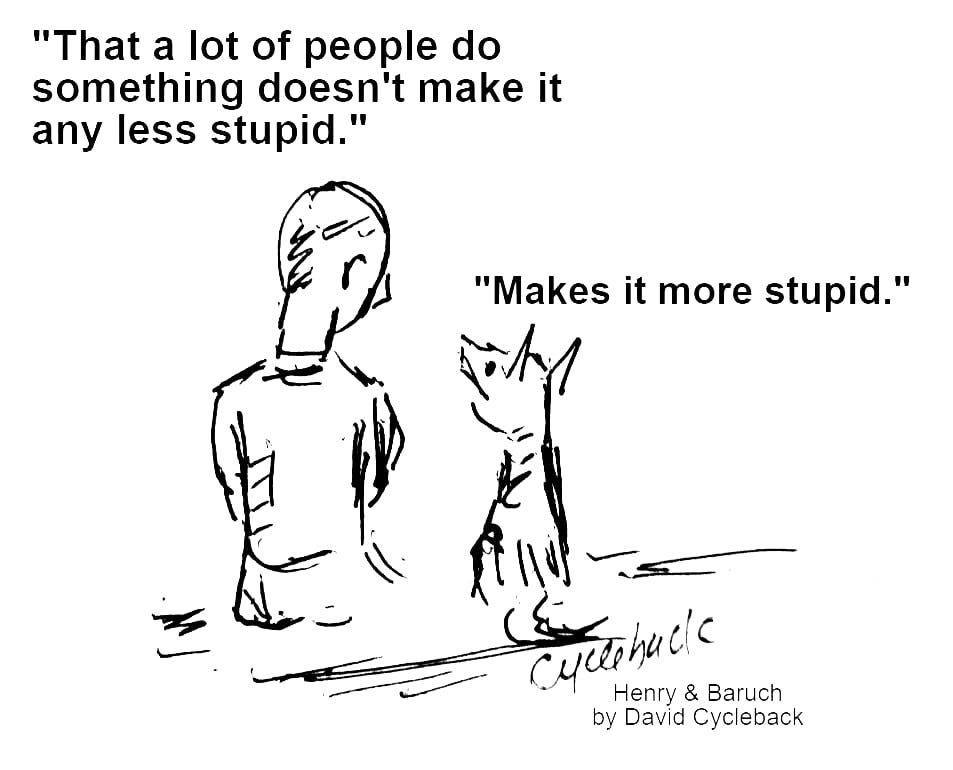
Like many religious and political movements, many UU spaces developed a strong sense of intellectual and moral superiority toward outsiders. Because many members saw their political and social views as especially enlightened and compassionate, disagreement was often interpreted not simply as a difference of opinion but as a sign of ignorance, immorality, and bigotry. Conservatives and religious traditionalists were frequently viewed as backward, intolerant, and ethically corrupt.
Another irony is that many UUs sincerely see themselves as unusually broad-minded and compassionate. In some ways, they are more welcoming toward LGBT people and certain religious and ethnic minorities than many traditional religious groups. However, being progressive does not eliminate false stereotyping and prejudice, but redirects them toward different targets. Misconceptions about racial and ethnic minority groups and false generalizations and even contempt toward political and religious conservatives, the working-class, poor, and rural people are common in many UU spaces.
All groups have organizational blind spots. Every group believes it is debating the important questions while dismissing perspectives outside its accepted framework as irrelevant, misguided, and beyond the scope of legitimate discussion. Groups naturally develop boundaries around what topics, assumptions, and viewpoints are considered reasonable and worthy of discussion. These shared parameters help create cohesion and efficiency, but they limit what members consider. Legitimate ideas, perspectives, and critiques outside the group’s conceptual framework are ignored, marginalized, or treated as off-topic rather than genuinely engaged with. This narrows thought and contributes to groupthink and close-mindedness.
Organizations built on freedom of belief, free inquiry, and civil liberties often change over time while continuing to present themselves through the lens of their original ideals and branding. Groups such as the American Civil Liberties Union and the Freedom From Religion Foundation still publicly portray themselves as defenders of freedom of thought and speech. Critics, however, increasingly argue that these organizations have developed narrow ideological orthodoxies and have become politically selective in how they apply those principles. Similar criticisms have been directed at the UU church, which many former members believe has become increasingly dogmatic, bureaucratic, and intolerant of internal disagreement. The broader pattern is familiar: organizations continue to see themselves through the image of their founding mission long after their internal culture and organizational priorities have moved away from it.
A group’s sense of moral righteousness and being uniquely enlightened produces and excuses hypocrisy. When hypocrisy, intolerance, and censorship within a group is pointed out, members justify it by insisting that their own views are uniquely moral, necessary, and correct. Practices that they condemned in other groups are excused or justified when their own group does them because the cause is seen as right and just.
In many organizations that have become corrupted and ideologically captured, ordinary members ignore how the institution itself is changing. People continue participating out of habit, social connection, and familiarity while repeating older slogans and ideals that no longer match the organization’s actual culture. I saw this in many UU congregations. Many members treated the church mainly as a social community and paid little attention to how its ideological boundaries were narrowing and an orthodoxy was developing, even as dissenting voices were suppressed and fellow congregants who saw what was going on left. Maintaining social harmony and comfort mattered more than critically examining whether the institution still lived up to its stated ideals.
As group psychology is universal, dissident groups within UUism often reproduce similar dynamics. Many groups that criticize the church’s increasing dogmatism and groupthink are themselves from very similar demographic and cultural backgrounds: older, white, highly educated, and politically left. Within these dissenting circles, outspoken political and social conservatives could still create discomfort and social tension. In other words, even groups formed partly in reaction against conformity are not immune from their own conformity pressures.
This pattern is not unique to churches. Many universities strongly portray themselves as centers of intellectual openness, yet many increasingly function as political monocultures where certain viewpoints are socially risky to express. Scientific communities, despite their commitment to truth-seeking, are also vulnerable to conformity pressures and institutional inertia. Philosopher of science Thomas Kuhn argued that scientific institutions resist challenges to accepted paradigms because careers and reputations become invested in existing frameworks. Charles Townes, winner of the 1964 Nobel Prize for Physics and the inventor of the laser, similarly observed that scientists can fall into intellectual ruts like any other social group, failing to look in other directions.
Right-wing groups regularly display similar contradictions. Many conservatives strongly criticize censorship, ideological conformity, and intolerance in leftist institutions. Yet when Republicans gain institutional power themselves, they engage in their own forms of censorship, ideological policing, loyalty tests, and social punishment for dissent.
Punk rock movements that rejected conformity often developed rigid fashion and music expectations. Radical political groups that oppose hierarchy often created their own cast systems. Online communities devoted to independent thinking often become echo chambers with their own approved beliefs and taboos.
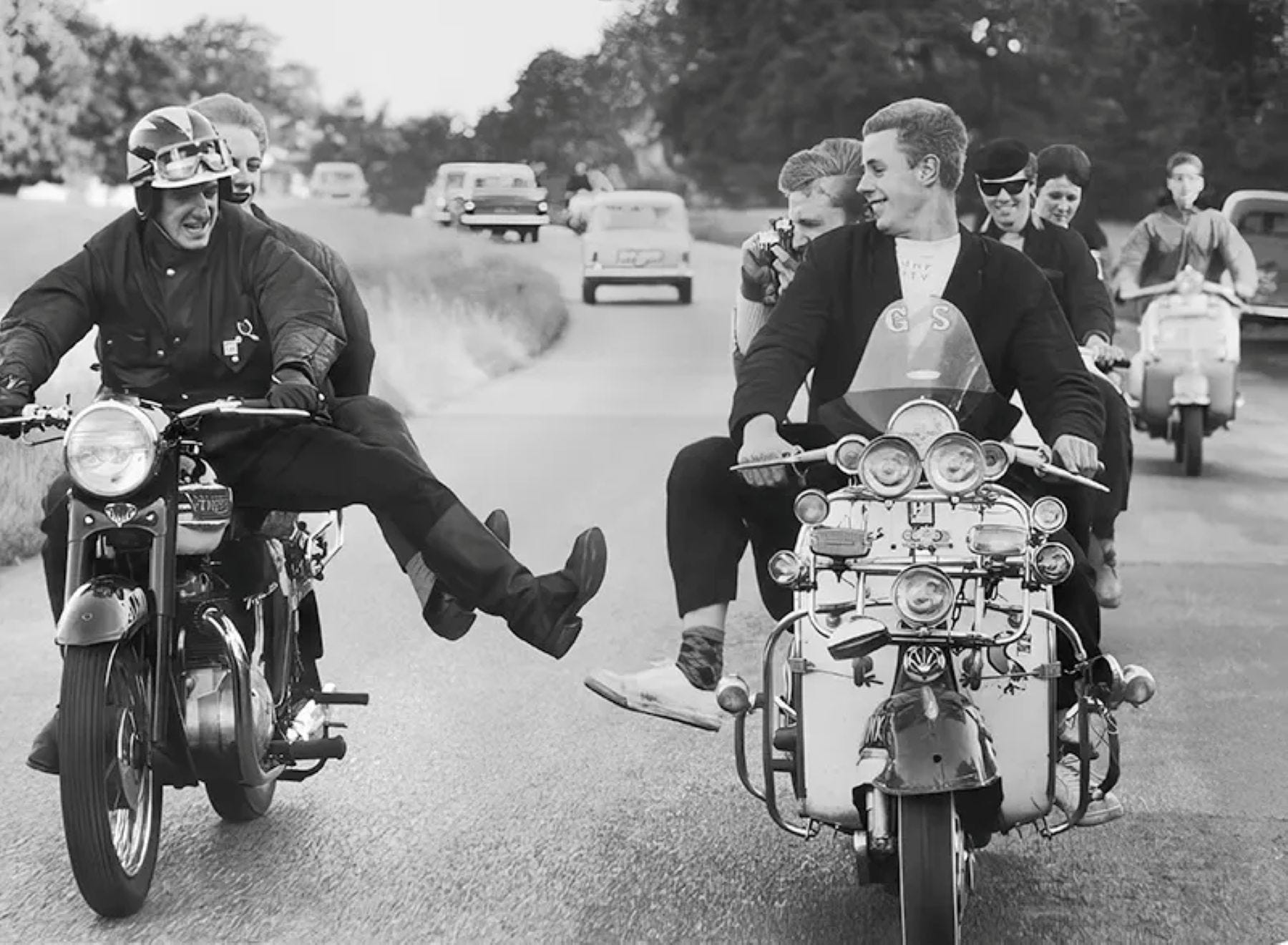
One of the sharpest observers of these dynamics was Eric Hoffer, a political philosopher and author of the book The True Believer. Hoffer argued that political, religious, and social mass movements are often organizationally and psychologically interchangeable. The doctrines are different, but the psychological dynamics are remarkably similar.
This post focuses on UUism because of my personal experience and familiarity, but the deeper point is universal. No human organization or movement escapes human group psychology. Groups that proclaim themselves uniquely enlightened, moral, open-minded, or tolerant are as vulnerable to blind spots, conformity pressures, prejudice, groupthink, and self-deception as every other group.
I could see the UUA's de facto creed coming, over half a century ago. I also recall reading Eric Hoffer's observation about the interchangeability of different ideologies that may seem unrelated at first glance. One example of this similarity or interchangeability that I have noticed (one that many observers may not think of) is the comparison between Original Sin and White guilt.
While Original Sin is usually associated with fundamentalist Christians, and White guilt with liberal secularists or cultural elitists, both of them reflect the same or similar mentality -- blindly accepting a concept of inherited guilt imposed from birth (either due to one's race or gender, or due to the alleged sin or transgression of Adam). This was a major factor which first HUGELY alienated me from fundamentalist religion - only to alienated all over again some years later when I was encountering a secularized, updated version of the same thing from secular UUA-style liberals. Their theologies may have come from opposite ends of the spectrum, but their mentalities were very much the same!