
When Activism is Counterproductive
How ideological dogmatism and activist insularity undermine coalition-building and social changec

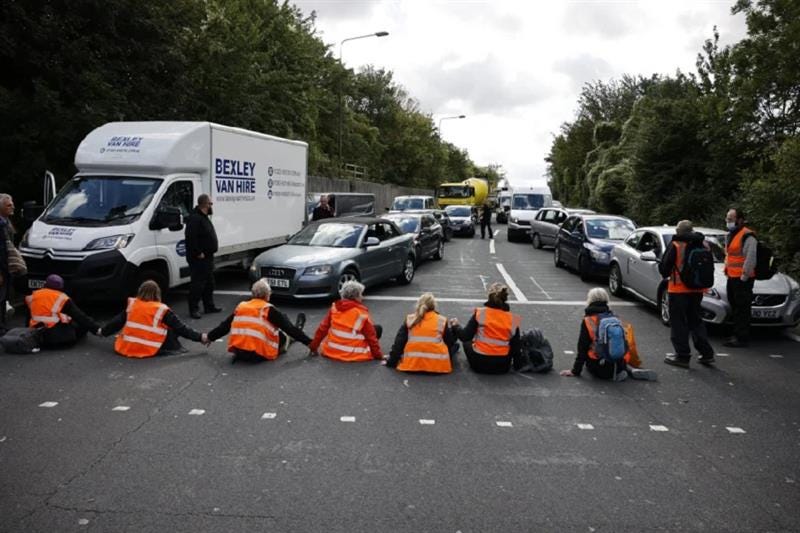
One of the great mistakes many modern activist movements make is assuming that moral passion alone creates social progress. Passion and conviction matter. However, large social problems are rarely solved by small ideological factions acting alone. They are solved when broad coalitions persuade and involve large numbers of ordinary people across political, cultural, and social boundaries.
This is especially true for issues such as environmental protection, addressing racism and other forms of bigotry, economic security, and public health. These are broad societal challenges requiring cooperation from millions of people with different backgrounds, values, and political beliefs. A movement cannot effectively address problems such as environmental protection or bigotry if it only appeals to a narrow ideological segment of the country while sidelining, alienating, or excluding everyone else. Successful reform movements historically built support across ideological lines rather than treating politics as a battle between morally pure insiders and corrupt outsiders.
Yet many activist movements increasingly operate through a narrow and elitist “us versus them” mentality. A relatively small but highly vocal activist culture begins treating everyone outside its ideological framework as ignorant, immoral, and oppressive. The goal switches from persuasion and coalition-building to ideological purity, moral policing, and attacking enemies.
This approach may feel emotionally satisfying to insiders, but it too often backfires.
Environmental protection is a good example. Conservation has historically attracted liberals, moderates, independents, and conservatives alike. Many hunters, fishers, ranchers, and farmers have strong conservation ethics. Politically conservative supporters of conservation have included Teddy Roosevelt, Herbert Hoover, Richard Nixon, Arnold Schwarzenegger, increasing numbers of young evangelical Christians, and organizations such as Ducks Unlimited and the Rocky Mountain Elk Foundation.
Critics point to the Sierra Club as an example of how political narrowing undermines broad coalition building. For most of its history, the Sierra Club focused exclusively on environmental and land conservation and had members from across the political spectrum. Recently, however, the organization expanded beyond environmental concerns into broader progressive political causes, including anti-racism, gender politics, pro-Palestinian and anti-Israel activism, and other social justice causes. This alienated moderates, independents, conservatives, and many leftist members who felt it was most effective for the organization to focus on one cause. Membership dropped by 60 percent in six years.
I recently heard a story that illustrates this problem well. My sister attended a small-town meeting intended to bring together people across the political spectrum on local environmental and land-preservation issues. However, the meeting was framed through progressive activist language and esoteric academic jargon. Politically conservative and rural attendees immediately concluded from this language that the meeting was politically slanted and left, and the meeting was aborted.
The issue was not environmental preservation itself. The issue was the ideological and cultural framing surrounding it that alienated and pushed away many who were interested in the cause.
Many activist movements unintentionally sabotage coalition-building through insider jargon, academic terminology, and symbolic rituals, such as land acknowledgments, that make sense to activists but alienate the broader public.
Many activist movements become insular subcultures. Their internal life becomes not about practical effectiveness but about internal self-policing, virtue signaling, social status, and fashion. For some participants, activism meets emotional and even quasi-religious needs: the need for moral purpose, identity, ritual, purity, and tribal belonging. This is why scholars such as sociologist Bradly Campbell and clinical psychologist Valerie Tarico compare some extreme activist movements to fundamentalist religions.
Polling has also repeatedly shown that extreme activist tactics tend to turn the public against both the movement and the cause itself. Vandalism, rioting, blocking highways, disrupting ordinary people’s lives, and aggressive confrontational protests may energize committed activists, but they tend to alienate the general public. Many people who initially sympathize with a cause become less supportive when movements appear coercive, hostile, and contemptuous toward the broader public.
Critics make similar arguments about some forms of progressive anti-racism activism. Most people support reducing racial discrimination and treating individuals fairly regardless of race. However, critics argue that some activist approaches unintentionally intensify racial divisions by framing society primarily through rigid oppressor-versus-oppressed narratives, collective guilt, and racial tribalism.
Critics have pointed to workplace diversity and anti-racism programs influenced by writers such as Robin DiAngelo and Tema Okun. Research, including studies at Harvard and the Universities of California-Berkeley and Minnesota, has shown that approaches emphasizing collective guilt, name-calling, and racial essentialism increase racial prejudice, resentment, and polarization, and do not increase diversity in the workplace. Scholars, such as sociologists Alexandra Kalev and Musa al-Gharbi and political scientist Anne Schneider, have argued that extreme and highly ideological anti-racism activism is not only counterproductive but has set back social justice and race relations in the United States.
Similarly, critics, including within the transgender, gay, and lesbian communities, argue that extreme and dogmatic transgender activism has become increasingly coercive and polarizing, ultimately undermining the cause itself. While most people support treating transgender people with dignity and protecting them from discrimination and violence, critics argue that activist cultures centered on public shaming and intimidation, cancel campaigns, compelled language, and labeling anyone with a different perspective as hateful and “transphobic” have generated widespread backlash, created division within the LGBT communities, and lowered general public support not just for transgender rights but also for gay and lesbian rights.
Social psychology helps explain why this happens. Human beings are tribal animals. Once politics becomes framed primarily as a battle between morally righteous insiders and dangerous outsiders, group identity begins overpowering problem-solving. When people feel attacked, insulted, and condemmed as immoral, they rarely become more open-minded. They usually become more defensive and tribal themselves.
Dogmatism and its attitude of “my way or the highway” make these problems worse. Complex social problems rarely have only one simple solution. What works in practice is often messy, gradual, counterintuitive, and based on compromise. Abstract policies that feel morally satisfying and ideologically righteous regularly fail and create unintended consequences when applied to the real world.
Successful long-term reform movements are focused on what actually works rather than ideological purity. If the goal is cleaner rivers, reduced racism, safer neighborhoods, stronger communities, or expanded opportunity, the focus should remain on practical solutions, listening to many perspectives and ideas from diverse people and groups, and broad cooperation.
Many of society’s largest problems, from environmental protection to public health and social division, require broad cooperation across political, class, and cultural lines. Movements that are elitist, exclusionary, and hostile to outsiders tend to undermine the cause by alienating the very people needed for lasting change. Societies rarely change because small and dogmatic activist groups declare their moral superiority. They change when large numbers of ordinary people find enough common ground to work together despite their differences.
References
American Psychological Association. “The Activist’s Dilemma: Extreme Protest Actions Reduce Popular Support for Social Movements.”
Dobbin, Frank, and Alexandra Kalev. Why Diversity Programs Fail: And What Works Better. Harvard Business Review.
Davis, Colin. “Do Radical Protests Turn the Public Away from a Cause? Here’s the Evidence.” University of Bristol.
Stanford University News Service. “How Violent Protests Can Backfire.”
The New York Times. “Sierra Club Embraced Social Justice, and Then It Tore Itself Apart.”
Canadian Broadcasting Network: “Trans rights? Yes. Toxic, in-your-face activism? No.”
Guardia: “UK universities struggle to deal with ‘toxic’ trans rights row.”
The Atlantic. “Americans Strongly Dislike PC Culture”
This is particularly counterproductive when one enters a group and is ostracized for not knowing the buzzwords that the group uses. I have tried to participate in activism, but felt unwelcome sometimes because I was not "in" on the lingo. It felt more like an exclusive club that sometimes protested as a way of recruitment into the group rather than folks who were together to change something.
The Progressive Movement that gained power within the Whitehouse and the Biden Administration is a vivid poignant example of a movement that failed through its policies. For instance, doing away with gas stoves, removing names from schools, demanding electric cars, mandating trans women in sports, rewriting history, etc, etc. The new found authority drove the Progressives to overcompensate and caused the electorate to push them from power,achieving the exact opposite of the intended consequences. The same effect goes for blacks rioting and stealing when a perceived injustice arises.