
When Discredited Ideas Return
Facilitated Communication and the cultural resurrection of pseudoscience

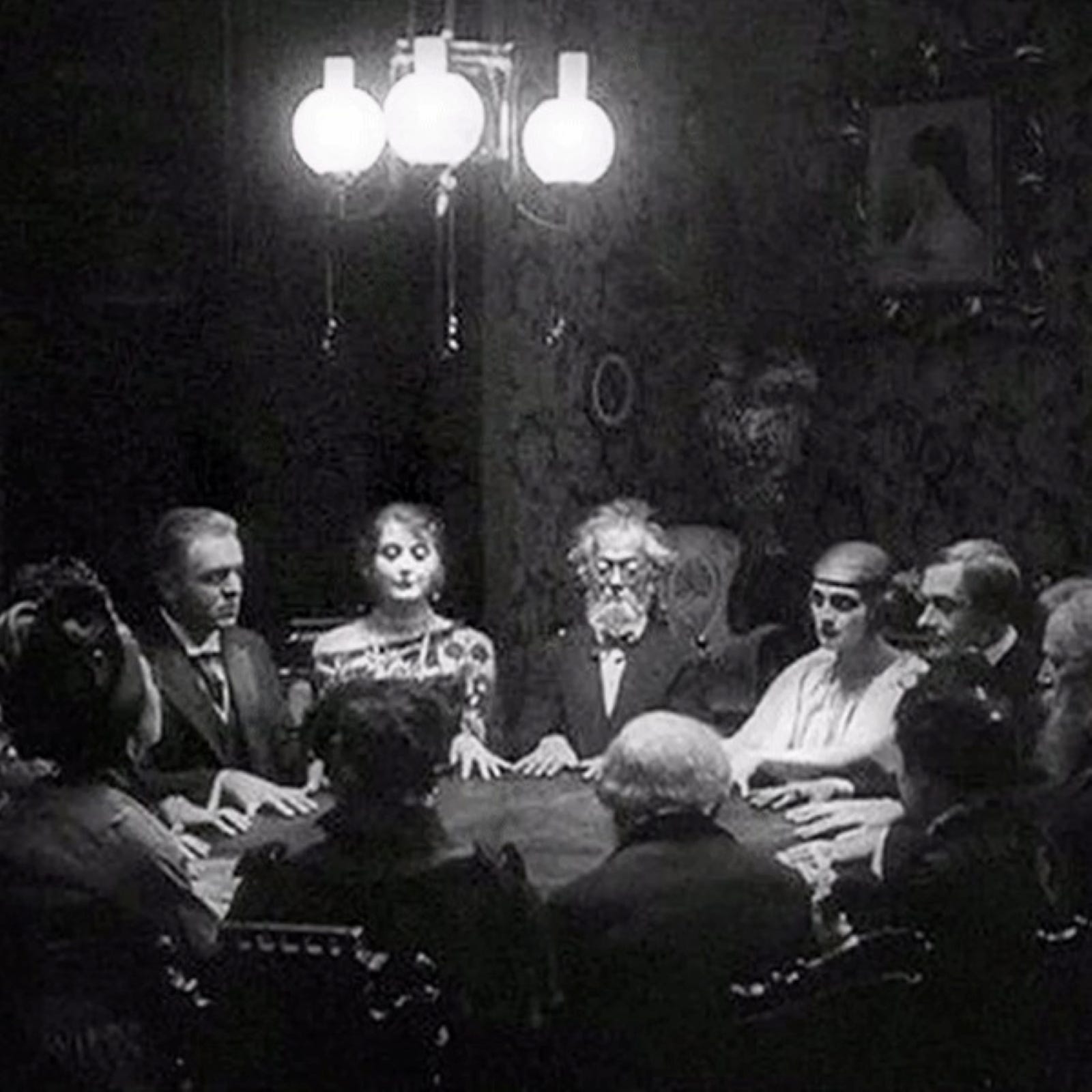
Facilitated Communication (FC) was scientifically discredited decades ago. Controlled studies repeatedly showed that facilitators were unconsciously authoring the messages themselves. Major scientific and medical organizations rejected the practice as pseudoscience, with Eastern Michigan University psychology professor James Todd writing that it is “the single most scientifically discredited intervention in all of developmental disabilities.” Yet recently, essentially the same idea returned to elite universities, bestselling publishing, and major media coverage through the Woody Brown controversy.
The controversy surrounding Woody Brown’s recent bestselling novel Upward Bound is therefore about far more than one book. It is a revealing case study in pseudoscience, media credulity, emotional reasoning, poor institutional and cultural memory, and the human tendency to believe compelling stories even when scientific evidence points the other way.
Facilitated Communication emerged in the 1980s and 1990s as a supposed breakthrough for nonverbal autistic people. A facilitator physically supported the person’s hand, arm, or shoulder while they typed or pointed to letters. Astonishingly sophisticated language often appeared. Families and educators were amazed.
Then scientists tested it.
Researchers performed simple blinded experiments. The autistic person would be shown one object while the facilitator saw another. If the communication truly came from the autistic person, the typed answer should match what they saw. Instead, the responses almost always matched the facilitator’s knowledge. When facilitators did not know the answer, communication typically collapsed.
Study after study reached the same conclusion: the facilitator was unconsciously controlling the output.
Howard Shane, a Harvard Medical School professor and director of the Autism Language Program, summarized the scientific consensus bluntly: “There’s never been any proof that any of these facilitated variants actually work. Since the 1990s it’s been demonstrated that it’s basically pseudoscience and wishful thinking.”
British clinical psychologist and neurodiversity expert Naomi Fisher said, “There is no scientific evidence that it works at all, unfortunately. It’s one of these things where people clearly really, really want to believe, and you can absolutely understand why they really want to believe that. And it has a very convincing effect. It looks true.”
Hank Schlinger, psychology professor at California State University, Los Angeles, wrote:
“After dozens of studies over three decades, the results are clear and unambiguous: in every case the author of the communications resulting from these techniques is always the facilitator and never the individual being facilitated.”
The most disturbing part is that FC has a documented history of harm. Facilitated messages led to false accusations of rape and abuse against parents and caregivers in the 1990s. Families were torn apart based on words later shown to originate from facilitators themselves.
A key point is crucial: The Facilitated Communications process looked true.
Woody Brown is a nonspeaking man with severe autism who communicates through a letter board using Rapid Prompting Method (RPM), a controversial technique closely related to the long-discredited practice of Facilitated Communication (FC). FC and RPM work through a human facilitator who physically stabilizes, manages, prompts, or assists the communication process while the disabled person points to letters or types. The core claim is that people who appear profoundly cognitively impaired secretly possess sophisticated hidden intelligence that can be unlocked through assisted communication.
In Woody Brown’s case, the facilitator is primarily his mother, who is a former Hollywood script editor with a master’s degree in literature from Northwestern University. She is also with Woody constantly and serves as his primary interpreter and communication partner. Critics argue that this creates an obvious authorship problem because the communication process depends heavily on a highly literate and creatively trained facilitator who is deeply emotionally invested in the outcome.
This is important because FC does not usually involve conscious fraud. Researchers concluded that facilitators often sincerely believe they are merely helping while unconsciously guiding the communication themselves through subtle muscular movements and prompts. Psychologists compare the phenomenon to a Ouija board, where participants genuinely feel they are not controlling the movement even though the motion originates unconsciously from them. This is known as the ideomotor effect.
Through RPM-assisted communication with his mother always at his side, Brown earned a bachelor’s degree from UCLA and an MFA at Columbia University and authored the novel Upward Bound. Major news outlets and popular media, from The New York Times and CBS News to People and Parade magazine, celebrated the story as an inspiring triumph of hidden intelligence finally being unlocked.
The appeal is obvious. Families want connection with their children. Educators and therapists want to believe they are uncovering rich inner lives trapped behind disability. Journalists are drawn to uplifting stories. Critics are easily portrayed as cruel or ableist.
Yet the scientific evidence against FC-style communication methods remains overwhelming.
This is why the Woody Brown controversy became explosive. Critics argued that publishers, universities, and journalists failed to seriously scrutinize the underlying method before celebrating the story. Skeptics pointed to familiar red flags from past FC controversies: communication dependent on a specific facilitator, sophisticated literary output appearing through assisted typing, and demonstrations where the user does not clearly appear to independently select letters.
The broader issue, however, is not simply autism or disability. It is human psychology.
First, emotional power is not evidence. FC and RPM succeeded culturally because they told a morally satisfying story. People wanted them to be true. Emotional conviction overwhelmed scientific skepticism.
Second, anecdotes are psychologically powerful but scientifically weak. The apparent success stories seemed compelling because humans naturally respond to vivid personal narratives. But controlled testing repeatedly contradicted those impressions. Science advances precisely because it distrusts intuition and appearances.
Third, sincerity is not reliability. Many FC and RPM facilitators genuinely believed they were helping. This is important because pseudoscience is often driven less by deliberate fraud than by self-deception.
Fourth, humans are extremely suggestible. Facilitators unconsciously influenced typing while sincerely believing they were passive helpers. This demonstrates how perception and intention are not always transparent even to ourselves.
Fifth, social pressure and moralization can suppress criticism. Skeptics of FC and RPM were often portrayed as heartless or ableist. In emotionally charged movements, disagreement can become morally taboo.
Sixth, even major elite media organizations can fall for pseudoscience when it aligns with emotionally satisfying narratives. Outlets such as NBC News, The Guardian, USA Today, and The New York Times, unquestioningly accepted FC and RPM when reporting on Woody Brown and his book, emphasizing inspirational narratives over rigorous scientific scrutiny. Even highly respected institutions are vulnerable to confirmation bias, social pressure, and moral framing.
What makes this especially strange is that some of these same organizations had previously reported on the scientific collapse of Facilitated Communication and the harm it caused. In past years, NBC News, The Guardian, and The New York Times had all published reporting and commentary discussing how FC failed controlled testing, was regarded as pseudoscientific by experts, and contributed to devastating false abuse accusations. Yet during the Woody Brown controversy, these earlier lessons seemed forgotten and disconnected from newer, unquestioning coverage. The institutions appeared to have little institutional memory of their own previous skepticism and reporting.
Seventh, widely discredited ideas can return surprisingly quickly. Many scientists, psychologists, and autism researchers expressed disbelief that FC-style methods were resurfacing because Facilitated Communication was so thoroughly discredited decades ago. Yet new terminology, such as RPM, emotionally compelling narratives, and a new generation unfamiliar with the original controversy allowed essentially the same claims to re-emerge. Discredited ideas rarely disappear completely. They often return repackaged under new language and supported by new cultural narratives.
Eighth, pseudoscientific methods such as FC can actively harm disabled or sick people by diverting time, energy, and resources away from approaches that are evidence-based and effective. Critics argue that years spent engaging in assisted letter-board communication reinforce dependency on facilitators rather than helping the severely autistic develop practical communication and life skills to the greatest extent possible.
Stuart Vyse, a psychologist and author of the book Believing in Magic: The Psychology of Superstition, made this criticism sharply while discussing the Woody Brown case:
“This young man was brought on The Today Show to mark Autism Awareness Month, and yet, in a cruel irony, everything about this case suggests that his true nature was not acceptable to his parents. He has been required to perform a pantomime in service of an appealing fantasy. Worse yet, like all victims of Facilitated Communication, he has endured years of useless tapping on letter boards that could have been spent in more appropriate instruction. Rather than learning to live as independently as possible, Woody remains dependent on his mother.”
This point is important because the controversy is not merely theoretical or academic. Critics argue that FC and RPM are harmful not only because they may produce false beliefs, but because they can shape the lives and development of vulnerable people around an illusion rather than evidence-based care.
The Woody Brown controversy is therefore not merely a literary dispute. It is a modern replay of an old lesson about the limits of human rationality. The danger is not simply that people can be fooled. It is that entire institutions can sincerely mistake emotionally satisfying illusions for truth and forget the past while believing they are defending compassion, science, and humanity.
References
National Capital Area Chapter of the Autism Society of America. “Position Statement on Facilitated Communication.”
https://www.ncsautism.org/position-statement-fc
deBoer, Freddie. “We Have to Hold the Line Against Facilitated Communication.” Substack.
https://freddiedeboer.substack.com/p/we-have-to-hold-the-line-against
Engber, Daniel. “Who Really Wrote Autistic Author Woody Brown’s Novel?” The Atlantic, April 2026.
https://www.theatlantic.com/books/2026/04/who-really-wrote-autistic-author-woody-brown-novel/686814/
SAGE Journals. “Facilitated Communication and Rapid Prompting Method.” Behavioral Disorders.
https://journals.sagepub.com/doi/10.1177/1053451217692564
Salzberg, Steven. “Facilitated Communication Has Been Called An Abuse Of Human Rights. Why Is It Still Around?” Forbes. https://www.forbes.com/sites/stevensalzberg/2018/06/18/facilitated-communication-may-be-an-abuse-of-human-rights-why-is-a-university-teaching-it/
Vyse, Stuart. “The Scandal of Woody Brown’s Upward Bound.” Skeptical Inquirer.
https://skepticalinquirer.org/exclusive/the-scandal-of-woody-browns-upward-bound/
Wikipedia. “Facilitated Communication.” Wikipedia.
https://en.wikipedia.org/wiki/Facilitated_communication
Schlinger, Hank. “If It Sounds Too Good to Be True: Extraordinary Claims Require Extraordinary Evidence.” Substack.
https://substack.com/home/post/p-193113545
Coyne, Jerry. “NBC and the NYT Appear to Be Duped by a Discredited Technique: Facilitated Communication.” Why Evolution Is True, April 16, 2026.
https://whyevolutionistrue.com/2026/04/16/nbc-and-the-nyt-appear-to-be-duped-by-a-discredited-technique-facilitated-communication/
Kelly, Liam. “The Awkward Case of the ‘Miracle’ Autistic Author Woody Brown.” The Telegraph.
https://www.telegraph.co.uk/books/authors/woody-brown-upward-bound-controversy/
The Hastings Center for Bioethics. “Bioethicists Should Speak Up Against Facilitated Communication.” The Hastings Center.
https://www.thehastingscenter.org/bioethicists-should-speak-up-against-facilitated-communication/
Burke, Michael. Syracuse University institute continues to use discredited technique with dangerous effects.” The Daily Orange. https://dailyorange.com/2016/04/double-talk-syracuse-university-institute-continues-to-use-discredited-technique-with-dangerous-effects/
NBC News. “Dark Shadows Loom Over Facilitated Talk.” NBC News.
https://www.nbcnews.com/health/health-news/dark-shadows-loom-over-facilitated-talk-flna1c9440658
The New York Times. “The Strange Case of Anna Stubblefield.” The New York Times, October 25, 2015.
https://www.nytimes.com/2015/10/25/magazine/the-strange-case-of-anna-stubblefield.html
The Guardian. “Tell Them You Love Me Review: This Chilling Documentary Is Vital, Challenging TV.” The Guardian, February 3, 2024.
This topic is a pet fascination of mine. On the one hand, I can see that the most of FC absolutely deserves to be discredited, and doing so could lead to all sorts of unexpected consequences, like casting doubt on the story of Helen Keller. The YouTuber Elephants in Rooms covered that topic here: https://youtu.be/O_th1EszK34?si=ALxShWw4ljQp7c7H
But then I’ve seen shockingly convincing clips of FC where the kid eventually learns how to type independently, and I can’t help but wonder if there’s still something there. Check out the 1:02 mark in the documentary Spellers: https://youtu.be/8h1rcLyznK0?t=3721&si=ILVrrlO3LyqxOMb1
I believe some form of Facilitated Communication was used against me every time I struggled to speak clearly, where they would fill in the gaps in my speech with their own narratives, using rapid prompting to prevent me from correcting them.
This was the most intense when my Selective Mutism was not treated, but has gone down significantly once I started to recover. It has also been the hardest mechanism for me to identify properly and stop people from doing it.
They believed they were offering assistance, but in reality, they were hindering my development and silencing my voice by preventing me from recognizing and seeking treatment for an anxiety disorder. They did this by misdiagnosing my anxiety as an anger management issue and responding to my anxiety with fearful reactions and silence. They treated my writing and text communication as pure rage, anger, and lashing out, only believing that my speech was my genuine and composed voice.