
Why Activists Usually Differ From the People They Claim to Represent
Why Visibility, Passion, and Organization Do Not Necessarily Equal Representation

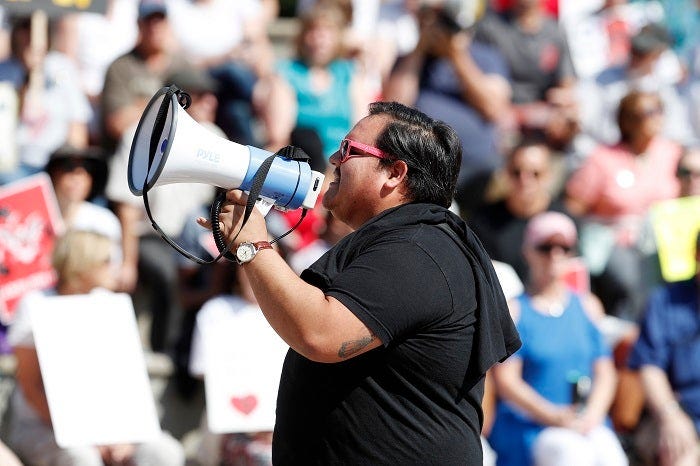
A common mistake in public debate is to assume that activist groups represent the views of the entire population they claim to advocate for. Most often, they do not.
This does not at all mean activists are dishonest or unimportant. Activists frequently play valuable roles in raising awareness, organizing action, pushing institutions to address neglected problems, and being on the cutting edge of new ideas and theories. However, activists are usually a small, self-selected subgroup rather than a representative sample of the broader population.
Consider a simple fact: most members of any demographic are not activists. Most women are not feminist activists. Most religious people are not religious activists. Most LGBT people are not LGBT activists. Most workers are not labor activists. Most environmentalists are not environmental activists.
The average person spends most of their time working, raising families, pursuing hobbies, and navigating everyday life. Activists, by definition, devote far more time, energy, and attention to a particular cause. Their priorities often become more intense and specialized than those of the people they seek to represent.
Political psychologists have long noted that people who become activists are not randomly selected. They tend to be more politically engaged, more ideologically committed, and more willing to engage in public conflict and advocacy than average citizens. Activism attracts people with strong convictions and a strong desire to influence society.
More than a century ago, sociologist Robert Michels developed what he called the “Iron Law of Oligarchy.” He argued that all large organizations tend to become dominated by a relatively small leadership class whose interests and perspectives can diverge from those of ordinary members. While Michels was writing about political parties and labor organizations, the principle applies broadly to activist groups as well. As a result, an organization’s leaders do not necessarily reflect the views of all, or even most, of its own members. Leaders are often selected from the most committed, ambitious, and politically engaged members of a group, which can create a gap between leadership positions and the views of ordinary supporters.
Organizations further amplify this effect. Those who care most deeply about an issue are usually the most likely to attend meetings, run for leadership positions, organize campaigns, and speak to the media. As a result, activist groups often come to reflect the views of the most passionate and committed members rather than the average member of the demographic.
One consequence is that activist groups sometimes advocate positions that are not widely shared by the populations they claim to represent. For example, polling has found that slogans such as “Defund the Police” were less popular among many black Americans than among some activist organizations and activists who promoted them. The same pattern can be found on the political right. Conservative activist organizations and highly engaged ideological activists often hold positions that are more rigid or more extreme than those of the average Republican or conservative voter. In each case, activists may represent one segment of a population without representing the population as a whole.
Similar patterns can be found elsewhere. Student activists are often more ideological than the average student. Religious activist organizations frequently reflect the views of highly engaged believers rather than ordinary congregants. Advocacy groups of all kinds are often led by people whose lives revolve around a cause in ways that differ from most members of the population.
Activist organizations are also usually less diverse than the groups they claim to represent. Organizations speaking for women, racial minorities, workers, or religious communities are regularly led disproportionately by people from particular educational, professional, or cultural backgrounds. The broader population is usually much more varied.
The problem is compounded by the media. Journalists, politicians, and institutions naturally seek out activist leaders because they are organized, visible, and willing to speak publicly. Yet these leaders may not fully represent either the broader population the organization claims to advocate for or even all of the organization’s own members. Over time, this can create the impression that a relatively small number of leaders speak for everyone in a group, even when many members disagree with them, hold more moderate views, or simply have different priorities.
In democratic societies, activists are often among the most visible members of a group. They are frequently the people journalists interview, politicians consult, and institutions listen to. Yet visibility should not be confused with representativeness.
The issue is not that activist organizations advocate particular viewpoints. That is precisely what activists are expected to do. The problem arises when activist leaders, journalists, institutions, or the public assume that those viewpoints necessarily reflect the views of the entire population they claim to represent. Sometimes they do, and sometimes they do not.
Determining how representative an activist group is requires evidence, not assumptions. Understanding the difference between a population and its activists can help us better evaluate public claims and avoid mistaking the most vocal members of a group for the group itself.
Most LGBT people would not even call themselves LGBT people. That in and of itself is an activist thing.
It was a coalition for specific common goals even when it was just Gay & Lesbian, two groups that are almost as different as different gets. When those goals were achieved, activists started slapping on more letters to try and keep the coalition going, forgetting that the goals of a coalition have to in fact be common. It's been more important to the activists to maintain a coalition at all than to represent the people purportedly encompassed by it.
I beg people to stop using the Acronym. I don't blame them (unless they're consciously doing it on purpose to blur distinctions and downplay ideological diversity, which some folks definitely do.) But I still wish everybody would stop. There is no such thing as an LGBT person.