
Why Echo Chambers Feel Like Reality
Human brains are adaptable

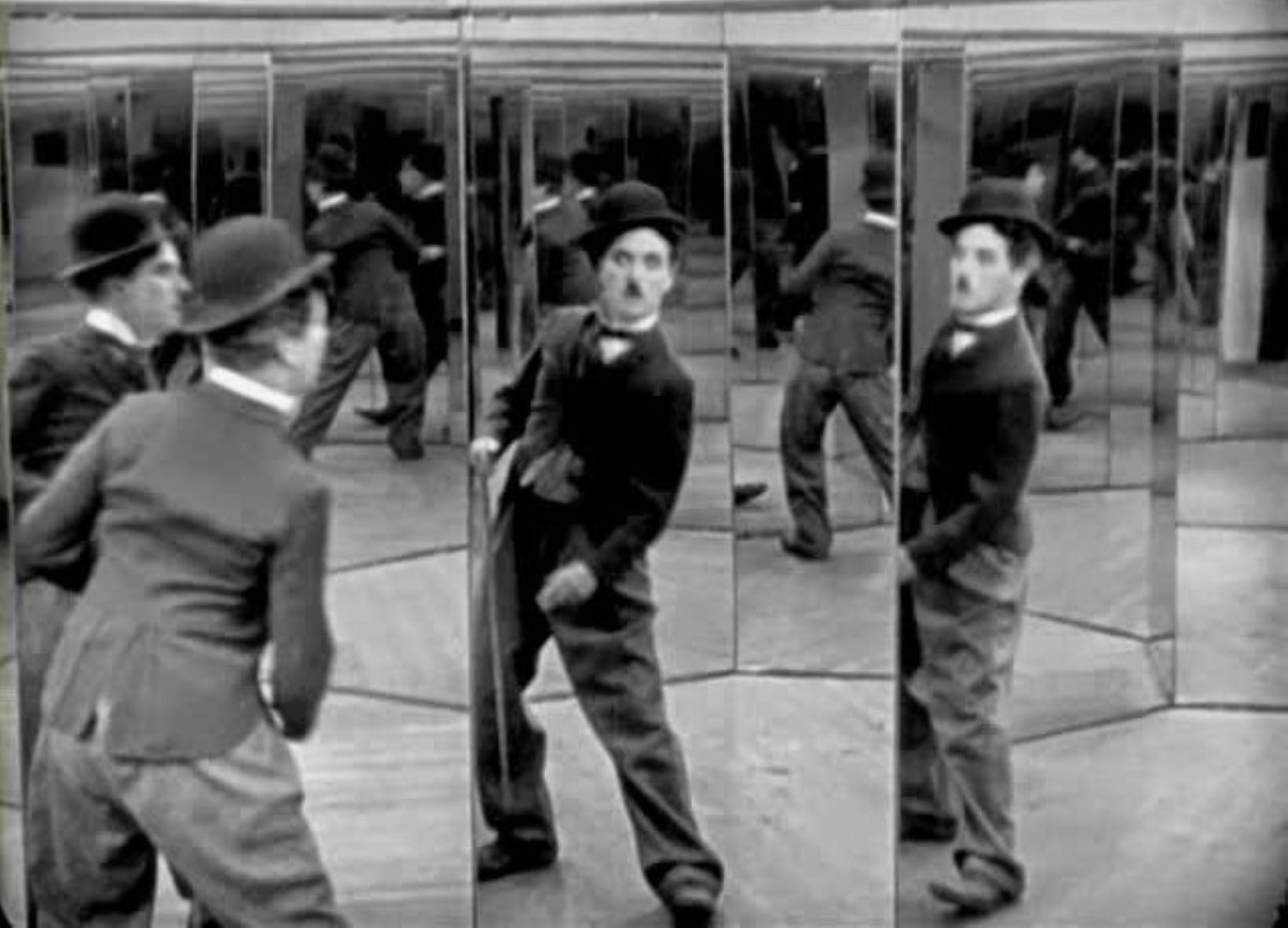
An echo chamber is a social and informational environment in which people are primarily exposed to beliefs, values, and interpretations that reinforce their existing worldview. Dissenting perspectives are filtered out, caricatured, and stigmatized, while agreement is continually socially reinforced.
One of the most powerful aspects of an echo chamber is that people inside it usually do not experience it as an echo chamber. They experience it as reality itself. That is what makes echo chambers so psychologically persuasive and so difficult to escape.
One of the most important things to understand is that human beings do not perceive or interpret the world in a purely direct or objective way. Humans evolved primarily for survival, not for accurately perceiving objective reality. From an evolutionary perspective, myths that aid survival and group cohesion can be more adaptive than beliefs that are accurate.
The human brain actively constructs meaning through stories, concepts, symbols, and mental models shaped by culture, language, education, social norms, and personal experience. Sociologists Peter Berger and Thomas Luckmann argued that societies socially construct much of what people experience as reality. Inside echo chambers, these socially reinforced interpretations become so dominant that alternative perspectives are pushed outside the realm of legitimacy.
This adaptability of the human brain to its environment is seen in how people become emotionally immersed in movies, music, religion, rituals, political movements, and styles of art. During a powerful film, concert, or religious ceremony, people temporarily enter a psychologically immersive reality shaped by shared emotion, symbolism, and narrative.
Human beings are deeply social and group-oriented creatures. People naturally look to those around them to determine what is normal, true, dangerous, and important. When nearly everyone in a person’s environment shares the same assumptions, emotional reactions, and narratives, those views begin to feel like obvious and unquestionable facts about reality itself. This helps explain why people inside echo chambers are often genuinely astonished that intelligent and reasonable people could see the world differently than they do. When you find yourself unable to comprehend how large numbers of people could sincerely hold different views, it is worth considering whether you may be inside an echo chamber and have had limited exposure to people with different experiences, backgrounds, and perspectives.
Social psychologist Lee Ross described a related tendency called naive realism. This is the belief that we see reality objectively, and see those who disagree as biased, ignorant, or irrational. Echo chambers intensify this tendency.
The deeper issue is that perception itself is shaped by biology, culture, emotion, language, and social learning. Different societies shape different styles of reasoning and attention. Neuroscience studies have shown that culture influences how visual and auditory information is processed at the very neurological and optical level. Psychiatrist Gregory Berns and psychologist Elizabeth Loftus showed that social influences, such as conformity pressures, can alter perception itself, not merely outward behavior.
Moralization is a key part of perception. People and groups innately divide the world into categories of right and wrong, good and bad, trustworthy and dangerous. Inside echo chambers, the group’s worldview increasingly becomes associated with moral goodness itself. The group’s beliefs are experienced not simply as one perspective among many, but as uniquely compassionate, rational, enlightened, and morally right. As a result, opposing views are no longer seriously considered in good faith. They are automatically dismissed as ignorant, irrational, hateful, dishonest, and corrupt. Outsiders come to be seen not simply as people with different interpretations, but as fundamentally misguided and morally illegitimate.
Echo chambers occur in many different environments. They can develop in dogmatic religious communities, where dissent is treated as sin, weakness, and betrayal. They can develop in political and social activist movements, where disagreement is interpreted as moral failure and loyalty to the enemy. They also flourish in many social media spaces, where algorithms, peer approval, and public shaming reward conformity and punish nuance. The important point is that echo chambers are not something only other people fall into. All of us are vulnerable to them.
Philosopher Thomas Kuhn wrote that people interpret the world through paradigms that shape what they notice and how they understand evidence. Echo chambers intensify this process by surrounding people with social reinforcement that makes a worldview feel unquestionably and self-evidently true.
The result is that people rarely realize they are inside an echo chamber because, from the inside, the echo chamber simply feels like reality.
"See the world" and "see reality" are ambiguous between perceptual seeing and cognitive "seeing" (that is, understanding). I think that there is nothing necessarily naive about claiming that either kind of seeing sometimes grasps objective facts. For it is compatible with recognizing that other people can be nonculpably mistaken about those facts. Someone who recognizes a mutual friend when I don't may be said to be objectively correct due to her superior vision and/or her greater nearness to that friend. Likewise, someone who accepts humanly caused climate change on the basis of their knowledge of the scientific literature, including the overwhelming consensus of experts, may be said to be objectively correct or reasonable, even if many lay people who lack such knowledge disbelieve the theory. In neither example can we conclude that the believer is trapped in an echo chamber.