
Why We Misrepresent the Views of Our Opponents
Misquotations, Half-Truths, and Missing Context

One of the most common features of political, religious, and ideological conflict is that people routinely misrepresent the views of their opponents.
Conservatives often misrepresent liberals. Liberals often misrepresent conservatives. Religious believers misrepresent atheists. Atheists misrepresent religious believers. In many public controversies, people are not arguing against what their opponents actually believe. They are arguing against distorted versions of those beliefs.
This problem extends beyond politics. Entire books, speeches, historical figures, and belief systems are routinely misunderstood, cherry-picked, and reduced to simplistic caricatures. People often react not to what was actually said, but to a version filtered through assumptions, stereotypes, headlines, social media, soundbites, and secondhand interpretations.
Why does this happen?
Part of the answer lies in how the human mind interprets information. We understand the world through simplified and distorted mental frameworks shaped by our existing beliefs. These frameworks help us navigate a complex world, but they also create blind spots.
When we encounter unfamiliar ideas, we often interpret them through our own assumptions rather than through the assumptions of the person expressing them. We unconsciously translate another person’s words into our own conceptual language to support our belief system. In the process, the original meaning can be lost.
A conservative who supports stricter immigration controls may see the issue primarily through concerns about law, national sovereignty, or economics. Critics may interpret the position as hostility toward immigrants. Conversely, someone who supports more open immigration policies may view their position as an expression of compassion or economic opportunity, while critics may interpret it as indifference to national security or social cohesion.
People also frequently misinterpret written and spoken statements. Rather than responding to what was actually said, they respond to what they believe was implied, what they fear was implied, or what they imagine the speaker secretly intended. Many never read the full book, article, speech, or interview themselves. Instead, they rely on headlines, social media posts, excerpts, and secondhand descriptions.

Confirmation bias reinforces the problem. People notice information that supports existing beliefs while overlooking information that challenges them. Motivated reasoning deepens the effect. Once people become emotionally invested in a particular narrative about an opponent, contradictory information is often ignored or reinterpreted.
Not all misrepresentation is accidental. In politics and ideological conflict, a distorted version of an opponent’s position is often easier to attack than the real thing. This is the essence of the straw man fallacy.
History is filled with examples.
Many critics of Charles Darwin portrayed him as claiming that life emerged purely by chance or that evolution disproved the existence of God, even though those were not the central arguments of his work.
Public discussions surrounding Jordan Peterson provide a more recent example. Critics have portrayed Peterson as opposing the use of preferred pronouns and seeking to restrict how transgender people identify themselves. Peterson, however, has consistently argued that his objection was to government-compelled speech and specific aspects of Canadian legislation, not to individuals identifying as they choose. He has stated that he uses a person's preferred pronouns as a matter of courtesy in personal interactions and that he generally accommodates polite requests. His objection, he argued, was to what he viewed as ideological demands and compelled language.
The same phenomenon occurs with famous quotations.
Shakespeare’s line, “The first thing we do, let’s kill all the lawyers,” is commonly cited as evidence that he disliked lawyers. In context, however, it is spoken by followers of a would-be tyrant who wish to eliminate those who uphold the law.
Many people repeat the phrase, “Money is the root of all evil.” The biblical text actually says, “The love of money is the root of all kinds of evil.”
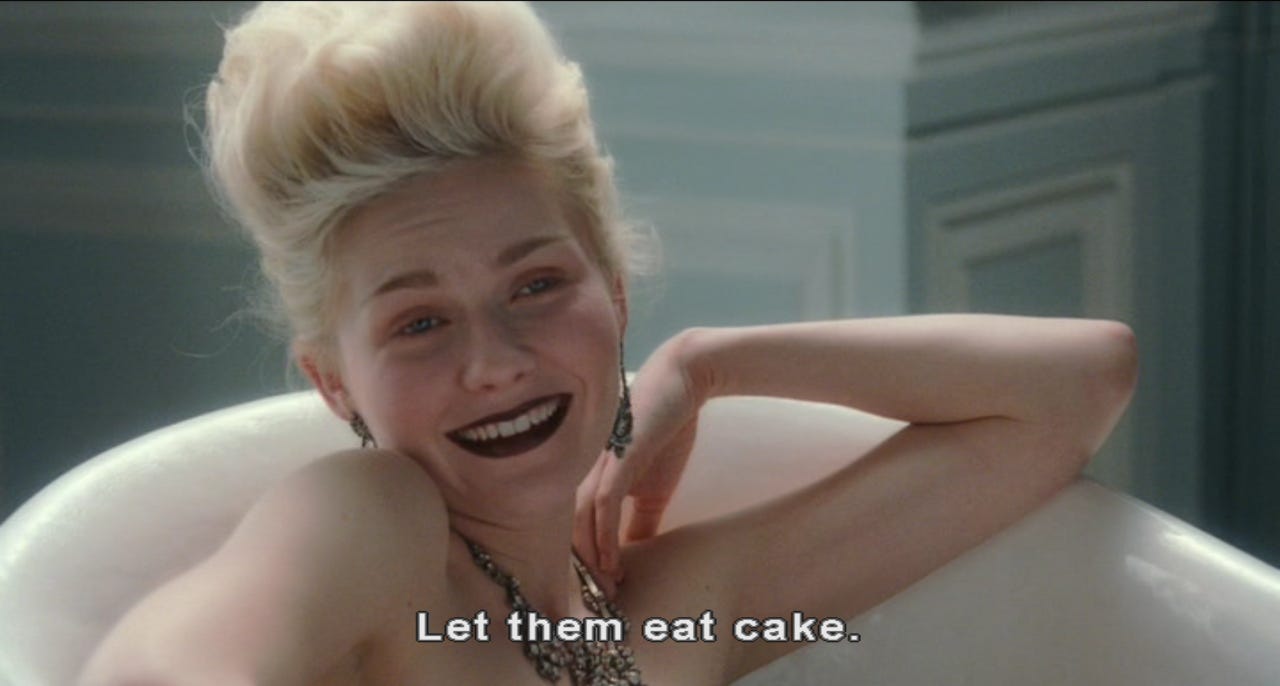
“Let them eat cake” was probably never spoken by Marie Antoinette, yet it helped create an enduring image of her as indifferent to ordinary people’s suffering.
Alexander Haig’s statement after the assassination attempt on Ronald Reagan, “I am in control here,” was widely interpreted as an attempt to seize authority. In reality, he was trying to reassure reporters that the government remained functional during a crisis.
Misrepresentation is often found in advertising.
The 1989 film Road House turned a negative Roger Ebert review into a positive marketing slogan. Advertisements quoted Ebert write, "I laughed a lot during this movie," creating the impression that he was praising the film. In context, Ebert was laughing at the movie's absurdity and explicitly stated, "This is not a good movie."
The 1994 film Color of Night is another example. Advertisements quoted critic Trevor Johnston as calling the film "Compelling, awesome, stunning..." The ad presented these words as praise. In reality, Johnston's review was strongly negative, and the quoted words were part of a sarcastic passage criticizing the film.
The same psychological mechanisms that distort our understanding of opponents also distort our understanding of allies and heroes.
The image of Che Gueverra appears on posters and T-shirts around the world as a symbol of rebellion and social justice. Yet many admirers know little about his role in the Cuban Revolution, his support for armed revolution, and his involvement in revolutionary tribunals and executions. The image often becomes detached from the historical person.
Mother Teresa was long presented as a flawless embodiment of compassion and charity. Later critics highlighted problems in her missions, statements on suffering, and the quality of care provided in some facilities. The public image shifted from near-sainthood to near-villainy in some circles. Both extremes obscure the complexity of her actual work and impact.
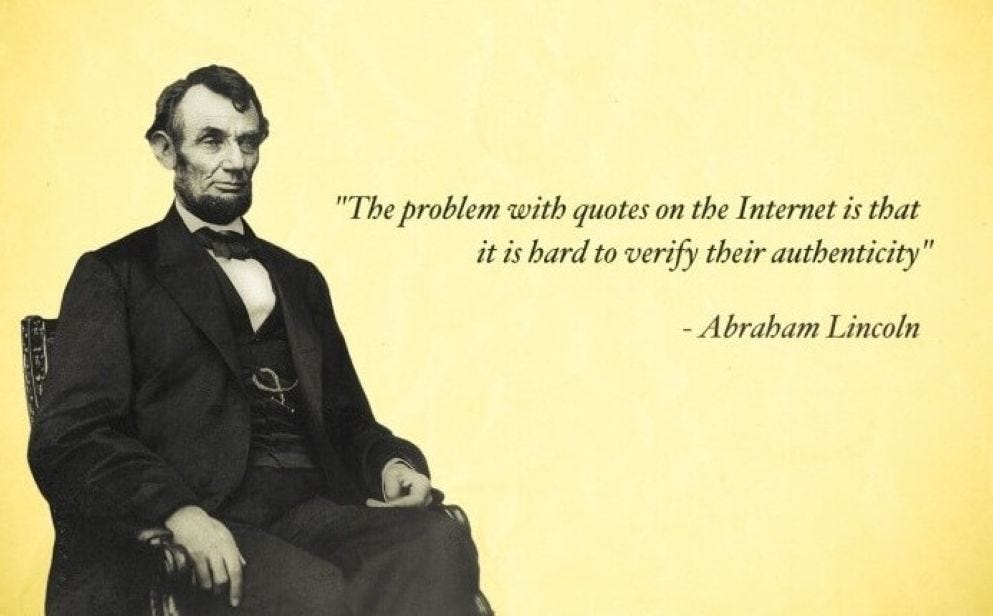
The deeper lesson is that misrepresentation is not merely a political problem. It is a human problem. The mind naturally simplifies a complicated world into categories, stories, stereotypes, heroes, and villains.
The solution begins with intellectual humility.
Before criticizing a position, it is worth asking whether its supporters would recognize the description being offered. Can we explain an opposing view in a way that its advocates would consider fair?
Just as importantly, have we actually read the book, article, speech, or original text ourselves? Have we heard the entire speech or only a short clip? Have we read the full quotation or only a fragment? Many people are confident they understand a political position, religious belief, book, or public figure that they have never directly encountered. Their understanding comes almost entirely from summaries, critics, social media posts, and other intermediaries.
Critical thinking requires making a reasonable effort to understand what was actually said and meant before deciding whether we agree or disagree with it. It requires more than identifying weaknesses in other people’s beliefs. It requires understanding those beliefs accurately in the first place.
In a world increasingly divided by politics, religion, culture, and ideology, the ability to fairly understand people we disagree with may be one of the most important intellectual skills we can develop.
Thanks for this insightful and balanced post.
This pattern is intensified not only by the social cohesion of togetherness, but also by basic and acute anxiety.